


Tying a vine shoot to the wire is one of the most repeated tasks in the vineyard, yet the choice of tie changes the whole season ahead. Many grape growers still use string, raffia or wire out of habit, without ever having tried an alternative. However, the wrong tie can damage the bark of the shoot, degrade in the first strong sun, or take twice as long to fit as it should. This article compares the main solutions for tying vines to help you choose the one best suited to your vineyard.
Raffia and natural ties

Raffia remains very common, particularly in traditional viticulture, as it’s biodegradable and inexpensive. However, its durability is limited: exposed to sun and moisture, it weakens within a few weeks and often needs replacing mid-season, which means more passes through the plot.
Wire and metal ties

Wire offers high mechanical strength and a firm hold, which explains its long-standing use in trellising. Its main drawback is the risk of damaging the shoot: as it thickens, wire that isn’t loosened in time can cut into the bark and create a weak point, or even a canker. This means regular monitoring and manual adjustment are needed, adding to the workload on larger plots.
Agricultural string and the mechanical tying machine

String, often applied with a mechanical tying machine, allows for fast work across large areas, making it a popular choice in intensive viticulture. The knot, however, remains a weak point: too tight, and it marks the shoot; too loose, and it comes undone in the first gust of wind. Tying machines also come with costs beyond the initial purchase: they require regular maintenance and operator training, an expense that’s often overlooked when comparing solutions.
Tubular ties ("spaghetti tubing")

Tubular ties, made of flexible plastic, are designed to limit direct contact with the bark and adjust more easily than wire. This is a real improvement over rigid solutions. Their main limitation is UV resistance over time: depending on plastic quality, they become brittle after one or two seasons of exposure, and fitting remains slower than an elastic tie, as they usually need a fastening or knot at each attachment point.
The anchor tie: the solution that adjusts with the shoot

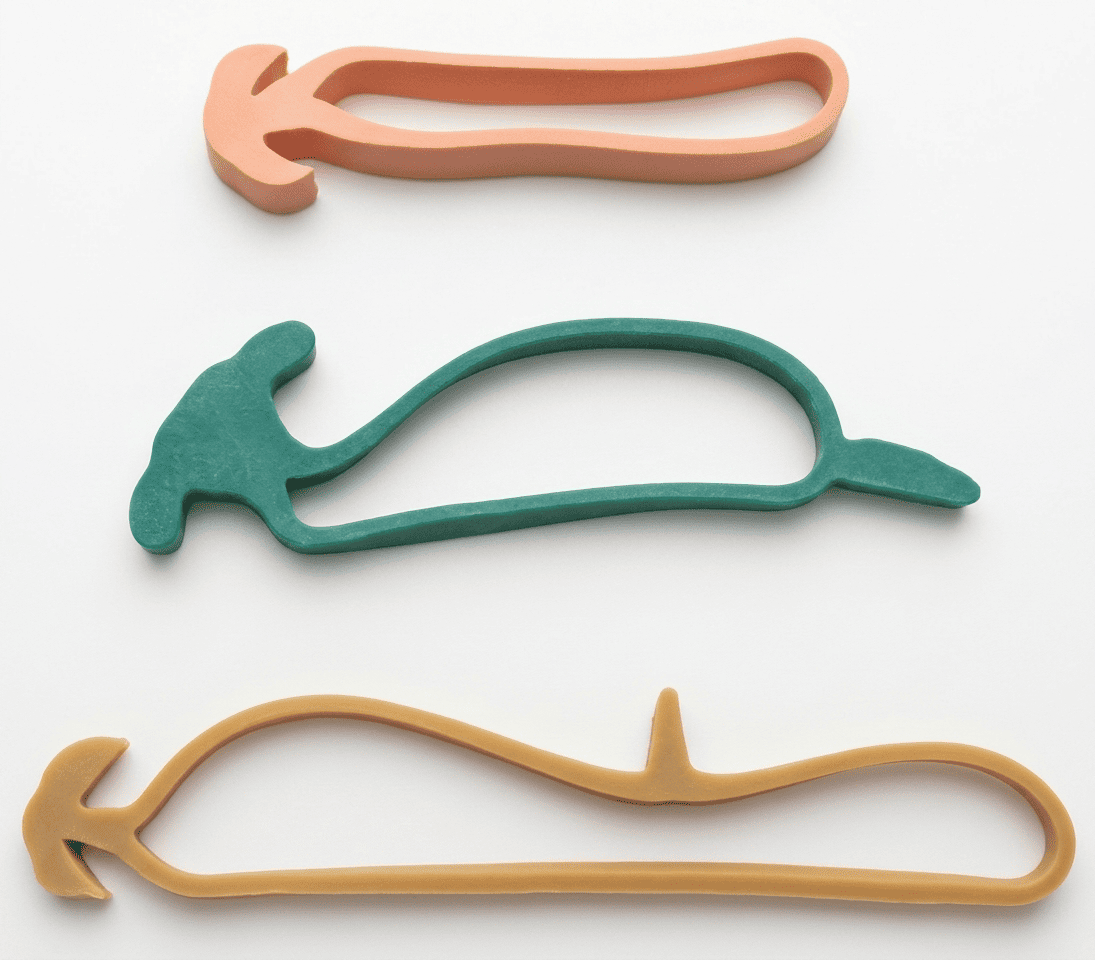
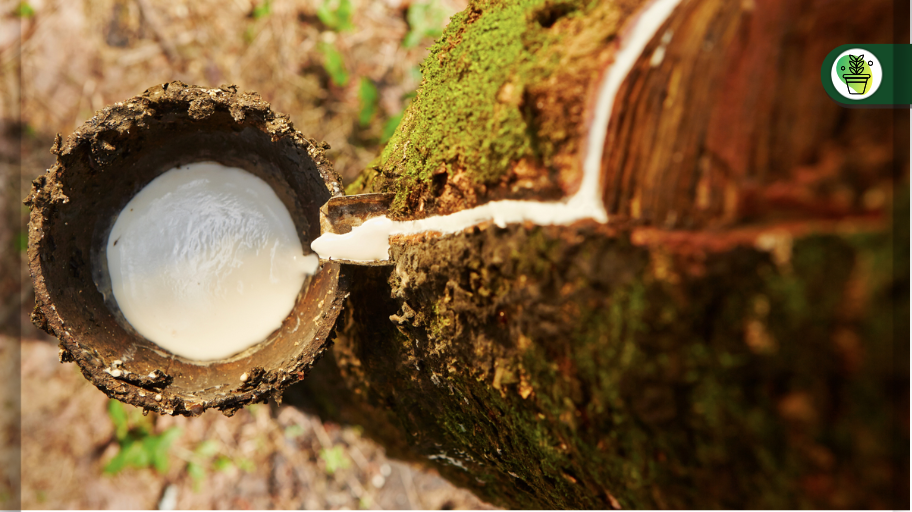
This is where the anchor tie stands apart from the solutions above. Its key feature is that it stretches as the shoot grows: unlike wire or string, it needs no manual loosening, as it naturally accommodates the thickening shoot without ever creating a constriction point. Fitting is also much faster: it’s applied by hand, with no tools or knots needed, whereas manual ties take time because of the knot, and tying machines add a further cost in maintenance and operator training. This time saving is very tangible on larger plots, where the tie must be applied hundreds, even thousands, of times a day. Made from EPDM, a synthetic rubber designed to withstand outdoor conditions, the anchor tie lasts 5 to 6 years outdoors, resisting UV and weathering without weakening like raffia or stiffening like tubular ties. It’s also reusable, cutting both cost per use and waste at the end of the season.
The best-selling diameters for vines are 5 cm, 8 cm and 10 cm, chosen according to shoot thickness and the stage of the growing cycle.
Frequently Asked Questions
What's the best tie for tying vines?
This mainly depends on how fast the shoot grows and how long the tie needs to last. For a hold that adjusts with growth without manual retightening, the anchor tie is the solution that requires the least maintenance during the season.
Can an anchor tie be reused from one year to the next?
Most natural ties (raffia, string) can’t be reused, as they degrade within a single season. Wire can be reused but needs reshaping. The anchor tie, made from EPDM and designed for outdoor use, withstands multiple seasons — up to 5 to 6 years — without losing its elasticity.
Can a tie damage the bark of the shoot?
Yes, this is a real risk with wire and, to a lesser extent, with string tied too tightly, if it isn’t loosened in time. The anchor tie avoids this problem, as it stretches gradually as the shoot thickens.
Do you need a specific tool to tie vines?
Wire and tubular ties require pliers or a fastening tool. String is often applied using a mechanical tying machine on larger plots. The anchor tie is fitted by hand, with no tools needed, making the job easier even on small areas or alongside a tying machine.
Want to try the anchor tie in your vineyard?
Bandex manufactures its anchor ties from EPDM, a synthetic rubber designed to withstand UV rays and weathering for up to 5-6 years outdoors. Contact our team for a sample suited to your vineyard.
![Bandex | [Video] Tutoring and Espalier of Vineyards and Olive Trees with Anchor Bands](https://rubberbandex.com/wp-content/uploads/2026/02/tuteurage-vigne-elastiques.png "Bandex | [Video] Tutoring and Espalier of Vineyards and Olive Trees with Anchor Bands")
