

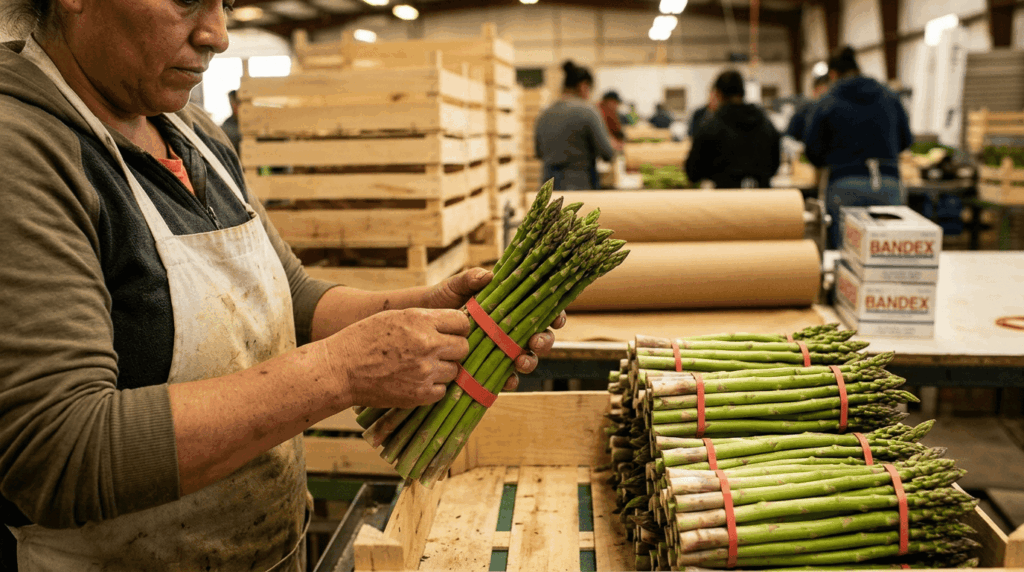
Why Asparagus Bundling Is Not a Minor Detail
Asparagus is one of the most delicate vegetable crops handled in packing facilities. From harvesting to supermarket shelves, every stage of handling matters. Spears can snap, bend and lose freshness far more easily than most workers in the field would like.
In this context, bundling a bunch of asparagus may seem like a minor task. It is not. Poor bundling—too tight, too loose or too slow—has a direct impact on product presentation, destination rejections and packing line productivity. During the harvest season, when packing volumes increase dramatically and staff work at a sustained pace for long hours, every second saved per bundle multiplies into thousands of units per day.
The question increasingly being asked by growers, cooperatives and packing facilities is simple: what is the most efficient manual bundling system for asparagus? In most facilities that still rely on manual bundling, the answer points in the same direction: rubber bands.
Rubber Bands Compared with Other Bundling Methods
For decades, asparagus was tied using raffia, sisal twine or plastic strips. These methods are still used in some operations, but they have well-known limitations.
Raffia requires training, slows down the packing process and provides inconsistent tension depending on the operator. Twine can mark the product when tightened too much or come loose when insufficient pressure is applied. Plastic cable ties are quick to use but require additional tools, generate more waste and do not adapt well to varying bundle diameters—particularly problematic when different grades are processed on the same packing line.
Rubber bands solve all of these issues at once. They can be applied in less than two seconds, without tools and without specialised training. They adapt to the bundle size without excessive pressure. They also withstand handling from packing to retail display without coming loose.
In an asparagus packing facility in Spain, France or Peru, where a single worker may spend eight hours continuously bundling asparagus, the cumulative difference between raffia and rubber bands is measured in hundreds of additional bundles per shift. It is not a matter of preference; it is a matter of productivity.
What Makes a Rubber Band Suitable for Asparagus?
Not all rubber bands perform equally well in packing conditions. The environment is demanding: constant humidity, cold temperatures and intensive handling. A rubber band that breaks, permanently deforms or damages the product is unsuitable, regardless of how inexpensive it may be.
Resistance to Moisture and Cold
Asparagus is handled in cold environments, often in the presence of water. A high-quality rubber band maintains its elasticity even after prolonged exposure to moisture. Lower-quality bands can become sticky, brittle or lose their tension under these conditions.
Consistent Elasticity Without Permanent Deformation
spearsThe band must provide sufficient tension to hold the bundle together throughout the entire logistics process—packing, cold storage, transport and retail display—without becoming loose or damaging the . This balance between holding strength and product protection is the most important technical requirement.
Dimensions Adapted to the Product
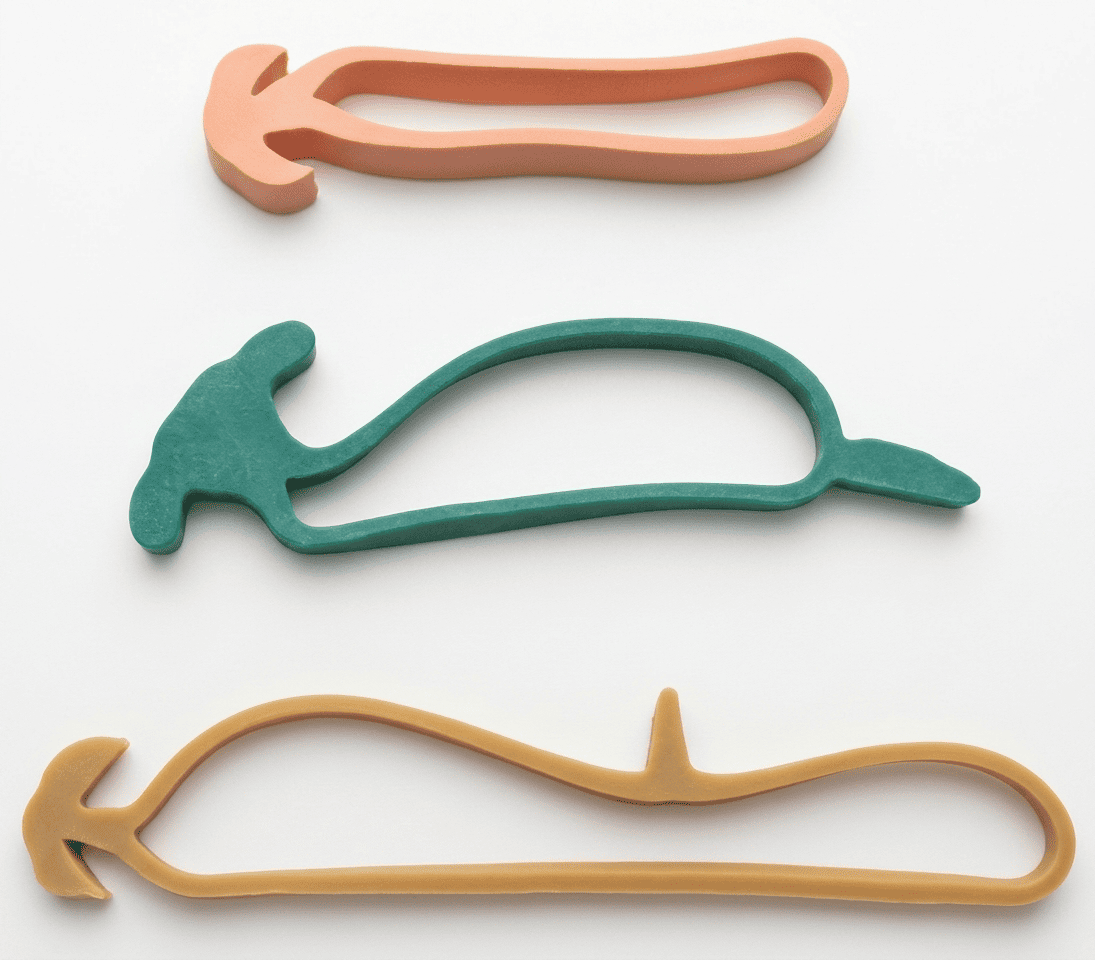
Bundling thick white asparagus is not the same as bundling fine green asparagus. Standard sizes commonly used in asparagus packing include 60×7 mm and 70×4 mm, although the exact dimensions depend on the typical spear diameter and bundle weight. A rubber band that is too small applies excessive pressure; one that is too large may not hold the bundle securely.
Food Contact Compliance
In European markets with strict traceability and food safety requirements, it is advisable to use rubber bands that comply with food contact regulations. This also facilitates exports to destinations with more demanding regulatory standards.
Thanks to their versatility, the same rubber bands are also widely used for bundling leeks, chives, herbs and other vegetables sold in bunches. Standardising bundling materials across the entire packing operation simplifies stock management and reduces the number of product references required.

Practical Benefits for Growers and Packing Facilities
The benefits of using the right rubber bands for asparagus packaging are not theoretical. They translate into measurable improvements in day-to-day operations.
Higher Productivity Per Worker
Applying a rubber band is faster than any other manual bundling method. Over an eight-hour shift, the accumulated difference can represent several hundred additional bundles per worker.
Reduced Waste and Fewer Destination Rejections
Consistent bundling reduces the number of bunches arriving with loose spears, poor presentation or damaged packaging. Fewer rejections mean lower losses and fewer customer complaints.
Uniform Product Presentation
A bundle secured with a suitable rubber band presents a neat and professional appearance at the point of sale. For retailers with demanding visual standards, this is far from insignificant.
Lower Packaging Costs
Rubber bands are a very low-cost packaging material. Replacing more complex or expensive bundling systems with high-quality rubber bands often results in a net saving per bundle, even when food-contact compliant materials are required.
Easy to Use Without Training
Unlike other bundling methods, rubber bands require no training and no additional tools. New workers can use them effectively from their first day on the packing line.
These advantages are seen across the major asparagus-producing and exporting countries supplied by Bandex agricultural rubber bands, including Spain, France, Morocco and Peru. Although packing conditions and market requirements differ significantly between these regions, the need for efficiency and quality in asparagus bundling remains the same.
Why Choose Bandex Rubber Bands for Asparagus?
Bandex is a European manufacturer of rubber bands with extensive experience in the agricultural sector. Production is focused on professional customers, including fruit and vegetable cooperatives, packing facilities, agricultural suppliers and packaging distributors.
Bandex agricultural rubber bands for asparagus are manufactured using high-quality rubber compounds selected for their reliable performance in cold and humid environments. Product consistency between orders—same dimensions, same colour and same retraction force—is particularly valued by high-volume packing facilities, where inconsistencies in bundling materials can lead to production stoppages or product rejection.
Bandex rubber bands intended for food contact applications comply with the food safety requirements demanded by European markets.
From Alicante, Spain, Bandex manages international shipments with short lead times, adapting to the seasonal demands of asparagus production: short campaigns, intense activity and no room for running out of essential packing materials.
Frequently Asked Questions
What type of rubber band should I use for bundling asparagus?
A flat natural rubber band with dimensions adapted to the bundle diameter is generally the best option. The most common sizes used in asparagus packing range from 60×7 mm to 70×4 mm. Testing with the actual product before placing a large order is always recommended.
Is it necessary to use food-safe rubber bands?
This depends on the destination market and the buyer’s quality requirements. Many major European food retailers require packaging and bundling materials that comply with food contact standards. Using certified materials from the beginning helps avoid supplier changes later.
How do I choose the correct rubber band size?
The main criterion is the diameter of the finished bundle. A rubber band that is too small may damage or mark the asparagus spears, while one that is too large may not provide secure bundling. Facilities handling both white and green asparagus of different calibres may benefit from keeping two different rubber band sizes in stock.
Do rubber bands perform well in cold and humid storage conditions?
A high-quality rubber band maintains its mechanical properties in cold and humid environments. Lower-quality products often lose elasticity, become sticky or break more easily under these conditions. This is one of the most important factors to evaluate before approving a supplier.
Rubber bands for asparagus may represent a very small packaging cost, but they have a significant impact on packing line efficiency. Choosing the right dimensions, ensuring consistent quality and complying with food safety requirements may seem like minor details, but during the harvest season, multiplied across thousands of bundles per day, they make a real difference in productivity, presentation and costs.
If you would like to test Bandex rubber bands, you can request free samples. The Bandex team will advise you on the most suitable dimensions for your product and provide a quotation tailored to your usual volumes.

![Bandex | [Video] Tutoring and Espalier of Vineyards and Olive Trees with Anchor Bands](https://rubberbandex.com/wp-content/uploads/2026/02/tuteurage-vigne-elastiques.png "Bandex | [Video] Tutoring and Espalier of Vineyards and Olive Trees with Anchor Bands")
